Buy augenaerzte.eu ?
We are moving the project
augenaerzte.eu .
Are you interested in purchasing the domain
augenaerzte.eu ?
domain@kv-gmbh.de · 0541-91531010
Buy augenaerzte.eu ?
How do you calculate the braking distance, the braking process, and the braking deceleration?
The braking distance can be calculated using the formula: braking distance = (initial velocity^2) / (2 * deceleration), where the deceleration is the rate at which the vehicle slows down. The braking process involves the driver applying the brakes, which causes friction between the brake pads and the wheels, leading to a decrease in the vehicle's speed. The braking deceleration can be calculated by dividing the change in velocity by the time it takes for the vehicle to come to a complete stop. **
How do you calculate the braking time and braking distance?
Braking time and braking distance can be calculated using the formula: Braking distance = (initial velocity^2) / (2 * deceleration) Where initial velocity is the speed of the vehicle before braking, and deceleration is the rate at which the vehicle slows down. Braking time can be calculated by dividing the braking distance by the initial velocity. These calculations are based on the assumption of constant deceleration, and may vary depending on factors such as road conditions and the vehicle's braking system. **

Similar search terms for Braking
Top-Angebote
Products related to Braking:
-
Purity Vision BIO Lifting eye oil roll-on with rejuvenating effect 5 mlPurity Vision BIO Lifting eye oil, 5 ml, Eye Serums for Women, The eye area is a highly sensitive area, as the skin there is exceptionally thin and fragile, making it more susceptible to signs of fatigue and ageing. It therefore also requires special treatment with ingredients and consistencies designed exactly for its needs. The Purity Vision BIO Lifting eye oil eye cream takes care of specific issues in the eye area. It delivers the nourishment and hydration needed for the skin around your eyes, improving its quality and restoring its vitality and a fresh, rested look. Characteristics: smooths wrinkles and fine lines nourishes the eye area intensively removes puffiness and dark circles under the eyes refreshes and softens the eye area brightens the eye area deeply moisturises and regenerates the skin How to use: Apply using the roll-on. Use daily. Avoid direct contact with the eyes.9,90 £*Shipping: 3,99 £Secure redirect to the provider
-
BOB Books VersaTiles Kit: Sight WordsBob Books offers repetition and fun stories to introduce important sight words. Consistent short vowels and simple stories ensure that each book is a gentle step into early reading.Alongside these books students can practice the skills they are...39,99 $*Shipping: 0,00 $Secure redirect to the provider
-
Uplifted Finds Artisan Vision Coasters 6 Pack Devil's Eye Wooden Table Protection Executive Studio & Mystic Sanctuary Decor Artisan Vision Coasters 6 Pack Devil's Eye Wooden Table Protection Executive Studio & Mystic Sanctuary Decor"Inaugurate a protective ""InsightSanctuary"" energy in your environment with our Artisan Vision Coasters. This premium 6piece set of wooden desktop insulation mats is the ultimate designer solution for creating a ""MysticModern"" or..."43,97 $*Shipping: 0,00 $Secure redirect to the provider
-
Uplift Essentials Improving Vision Pinhole Glasses For Eye Training And Focus Correction style AStrengthen your eye focus naturally with these specially designed pinhole glasses that help reduce visual strain and support healthier eyesight habits. By letting your eyes look through precision micro holes, these glasses encourage your vision to...34,97 $*Shipping: 0,00 $Secure redirect to the provider




-
What are the differences between braking to walking speed and braking?
Braking to walking speed typically involves gradually reducing speed until coming to a complete stop, whereas braking refers to the act of slowing down a moving vehicle. When braking to walking speed, the goal is to smoothly decelerate without any sudden stops, while braking may involve more forceful actions to slow down quickly. Additionally, braking to walking speed is often used in situations where a vehicle needs to stop at a precise location, such as at a crosswalk or intersection. **
-
How do you calculate braking time and braking distance in physics?
In physics, braking time and braking distance can be calculated using the equations of motion and the principles of kinematics. The braking time can be calculated using the equation t = v/u, where t is the braking time, v is the final velocity, and u is the initial velocity. The braking distance can be calculated using the equation d = (v^2 - u^2) / (2a), where d is the braking distance and a is the deceleration. These equations take into account the initial and final velocities, as well as the deceleration of the object to determine the braking time and distance. **
-
Is braking a reflex?
Braking can be considered a reflex in certain situations. When a driver reacts to a sudden obstacle or hazard on the road by immediately pressing the brake pedal, it can be seen as a reflexive action. This is because the response is automatic and occurs without conscious thought. However, braking can also be a learned behavior, as drivers are trained to use their brakes in specific situations through practice and experience. Therefore, while braking can be a reflex in some cases, it can also be a learned and intentional action. **
-
What is the formula for braking acceleration and braking time in physics?
The formula for braking acceleration is given by \( a = \frac{v_f - v_i}{t} \), where \( a \) is the braking acceleration, \( v_f \) is the final velocity, \( v_i \) is the initial velocity, and \( t \) is the time taken to come to a stop. The formula for braking time can be calculated using the equation \( t = \frac{v_f - v_i}{a} \), where \( t \) is the braking time. These formulas are used to calculate the rate at which an object slows down when braking. **


What is the difference between a full braking and an emergency braking?
Full braking refers to applying the brakes with maximum force in a controlled manner to slow down or stop the vehicle. This can be done in response to normal traffic conditions or when approaching a stop sign or traffic light. On the other hand, emergency braking is a sudden and forceful application of the brakes in response to an unexpected hazard or danger, such as a pedestrian stepping into the road or a vehicle suddenly stopping in front. Emergency braking is typically done to avoid a collision and requires quick reflexes and a strong, immediate response from the driver. **
What is the difference between braking with a clutch and braking without?
Braking with a clutch involves pressing the clutch pedal while simultaneously applying the brakes, which disengages the engine from the transmission and allows the vehicle to coast to a stop. This method is often used in manual transmission vehicles to prevent stalling. On the other hand, braking without using the clutch means simply applying the brakes without disengaging the engine from the transmission, which can cause the vehicle to stall if the engine speed drops too low. In summary, the main difference is that braking with a clutch allows the vehicle to coast to a stop without stalling, while braking without the clutch can potentially lead to stalling if not done properly. **
Top-Angebote
Products related to Braking:
-
Happy Pet Pantry Pure Sight Pet Eye Wipes For Dogs & Cats Tear Stain Remover & Daily Eye Cleaner Pure Sight Pet Eye Wipes For Dogs & Cats Tear Stain Remover & Daily Eye CleanerKeep your pet looking fresh, clean, and comfortable every day with pet eye wipes designed to gently remove dirt, discharge, and tear stains. Perfect for both dogs and cats, these soft cleansing wipes help maintain a cleaner eye area without causing...31,97 $*Shipping: 0,00 $Secure redirect to the provider
-
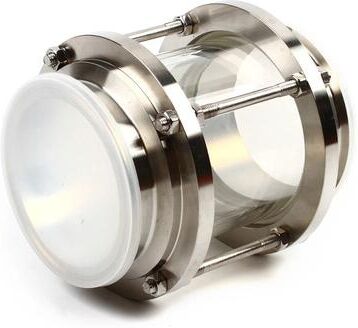
All Categories Goods Inline Sanitary Flow Sight Glass With Tri Clamp Sight Glass For Food & Beverage Inline Sanitary Flow Sight Glass With Tri Clamp Sight Glass For Food & BeverageImagine always knowing exactly whats flowing through your system at a glance no guesswork, no interruptions. This 4 approx inline sight glass gives brewers, food processors, and beverage makers a crystalclear view of liquids in motion, so you can...126,97 $*Shipping: 0,00 $Secure redirect to the provider
-
Purity Vision BIO Lifting eye oil roll-on with rejuvenating effect 5 mlPurity Vision BIO Lifting eye oil, 5 ml, Eye Serums for Women, The eye area is a highly sensitive area, as the skin there is exceptionally thin and fragile, making it more susceptible to signs of fatigue and ageing. It therefore also requires special treatment with ingredients and consistencies designed exactly for its needs. The Purity Vision BIO Lifting eye oil eye cream takes care of specific issues in the eye area. It delivers the nourishment and hydration needed for the skin around your eyes, improving its quality and restoring its vitality and a fresh, rested look. Characteristics: smooths wrinkles and fine lines nourishes the eye area intensively removes puffiness and dark circles under the eyes refreshes and softens the eye area brightens the eye area deeply moisturises and regenerates the skin How to use: Apply using the roll-on. Use daily. Avoid direct contact with the eyes.9,90 £*Shipping: 3,99 £Secure redirect to the provider
-
BOB Books VersaTiles Kit: Sight WordsBob Books offers repetition and fun stories to introduce important sight words. Consistent short vowels and simple stories ensure that each book is a gentle step into early reading.Alongside these books students can practice the skills they are...39,99 $*Shipping: 0,00 $Secure redirect to the provider
-
How do you calculate the braking distance, the braking process, and the braking deceleration?
The braking distance can be calculated using the formula: braking distance = (initial velocity^2) / (2 * deceleration), where the deceleration is the rate at which the vehicle slows down. The braking process involves the driver applying the brakes, which causes friction between the brake pads and the wheels, leading to a decrease in the vehicle's speed. The braking deceleration can be calculated by dividing the change in velocity by the time it takes for the vehicle to come to a complete stop. **
-
How do you calculate the braking time and braking distance?
Braking time and braking distance can be calculated using the formula: Braking distance = (initial velocity^2) / (2 * deceleration) Where initial velocity is the speed of the vehicle before braking, and deceleration is the rate at which the vehicle slows down. Braking time can be calculated by dividing the braking distance by the initial velocity. These calculations are based on the assumption of constant deceleration, and may vary depending on factors such as road conditions and the vehicle's braking system. **
-
What are the differences between braking to walking speed and braking?
Braking to walking speed typically involves gradually reducing speed until coming to a complete stop, whereas braking refers to the act of slowing down a moving vehicle. When braking to walking speed, the goal is to smoothly decelerate without any sudden stops, while braking may involve more forceful actions to slow down quickly. Additionally, braking to walking speed is often used in situations where a vehicle needs to stop at a precise location, such as at a crosswalk or intersection. **
-
How do you calculate braking time and braking distance in physics?
In physics, braking time and braking distance can be calculated using the equations of motion and the principles of kinematics. The braking time can be calculated using the equation t = v/u, where t is the braking time, v is the final velocity, and u is the initial velocity. The braking distance can be calculated using the equation d = (v^2 - u^2) / (2a), where d is the braking distance and a is the deceleration. These equations take into account the initial and final velocities, as well as the deceleration of the object to determine the braking time and distance. **
Similar search terms for Braking
-
Uplifted Finds Artisan Vision Coasters 6 Pack Devil's Eye Wooden Table Protection Executive Studio & Mystic Sanctuary Decor Artisan Vision Coasters 6 Pack Devil's Eye Wooden Table Protection Executive Studio & Mystic Sanctuary Decor"Inaugurate a protective ""InsightSanctuary"" energy in your environment with our Artisan Vision Coasters. This premium 6piece set of wooden desktop insulation mats is the ultimate designer solution for creating a ""MysticModern"" or..."43,97 $*Shipping: 0,00 $Secure redirect to the provider
-
Uplift Essentials Improving Vision Pinhole Glasses For Eye Training And Focus Correction style AStrengthen your eye focus naturally with these specially designed pinhole glasses that help reduce visual strain and support healthier eyesight habits. By letting your eyes look through precision micro holes, these glasses encourage your vision to...34,97 $*Shipping: 0,00 $Secure redirect to the provider
-
BOB Books Water Workbook: Sight Words SetBring Bob Books characters to life and extend the learning from the beloved Bob Books Kindergarten Sight Words series! Children have on-the-go fun while developing critical prereading and fine motor skills. Use the soft-tip water pen to fill the...22,99 $*Shipping: 0,00 $Secure redirect to the provider
-
Scholastic Teaching Resources Sight Word Readers Parent PackHelp your child soar in reading with this set of 25 little books that teach 50 of the most frequently used words in print! Kids will love these playful stories they can read all by themselves. You'll love the fact that each one builds reading skills...23,99 $*Shipping: 0,00 $Secure redirect to the provider
-
Is braking a reflex?
Braking can be considered a reflex in certain situations. When a driver reacts to a sudden obstacle or hazard on the road by immediately pressing the brake pedal, it can be seen as a reflexive action. This is because the response is automatic and occurs without conscious thought. However, braking can also be a learned behavior, as drivers are trained to use their brakes in specific situations through practice and experience. Therefore, while braking can be a reflex in some cases, it can also be a learned and intentional action. **
-
What is the formula for braking acceleration and braking time in physics?
The formula for braking acceleration is given by \( a = \frac{v_f - v_i}{t} \), where \( a \) is the braking acceleration, \( v_f \) is the final velocity, \( v_i \) is the initial velocity, and \( t \) is the time taken to come to a stop. The formula for braking time can be calculated using the equation \( t = \frac{v_f - v_i}{a} \), where \( t \) is the braking time. These formulas are used to calculate the rate at which an object slows down when braking. **
-
What is the difference between a full braking and an emergency braking?
Full braking refers to applying the brakes with maximum force in a controlled manner to slow down or stop the vehicle. This can be done in response to normal traffic conditions or when approaching a stop sign or traffic light. On the other hand, emergency braking is a sudden and forceful application of the brakes in response to an unexpected hazard or danger, such as a pedestrian stepping into the road or a vehicle suddenly stopping in front. Emergency braking is typically done to avoid a collision and requires quick reflexes and a strong, immediate response from the driver. **
-
What is the difference between braking with a clutch and braking without?
Braking with a clutch involves pressing the clutch pedal while simultaneously applying the brakes, which disengages the engine from the transmission and allows the vehicle to coast to a stop. This method is often used in manual transmission vehicles to prevent stalling. On the other hand, braking without using the clutch means simply applying the brakes without disengaging the engine from the transmission, which can cause the vehicle to stall if the engine speed drops too low. In summary, the main difference is that braking with a clutch allows the vehicle to coast to a stop without stalling, while braking without the clutch can potentially lead to stalling if not done properly. **
* All prices are inclusive of VAT and, if applicable, plus shipping costs. The offer information is based on the details provided by the respective shop and is updated through automated processes. Real-time updates do not occur, so deviations can occur in individual cases. ** Note: Parts of this content were created by AI.